
What is Ethereum?
At its core, Ethereum is a decentralized global software platform powered by blockchain technology. It is most commonly known by its original cryptocurrency, ether or ETH. Ethereum can be used by anyone to create any proprietary digital technology. It has a token designed for use in the blockchain network, but it can also be used by participants as a payment method for work done on the blockchain.
Ethereum is designed to be scalable, programmable, secure and decentralized. It is the blockchain of choice for developers and businesses creating technology based on it to change the way many industries work and the way we live our daily lives. It natively supports smart contracts, the key tool behind decentralized applications. Many decentralized finance (DeFi) and other applications use smart contracts in combination with blockchain technology.
Ethereum, like other cryptocurrencies, incorporates blockchain technology. Imagine a very long chain of blocks. All information contained in each block is added to each newly created block with new data. An identical copy of the blockchain is distributed throughout the network. That blockchain is verified by a network of automated programs that reach consensus on the validity of transaction information. No changes can be made to the blockchain unless the network reaches consensus. This makes it very safe.
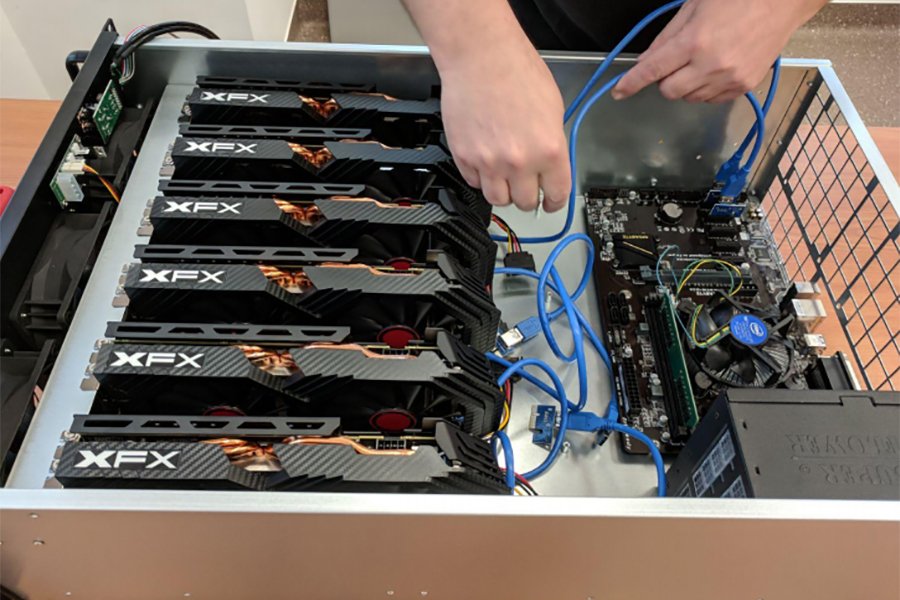
Consensus is achieved using a protocol called a consensus mechanism. Ethereum uses a proof-of-work protocol, where a network of participants runs software that tries to prove that an encrypted number is valid. This is called mining. The first miner to prove the validity of the number is rewarded in ether. A new block is opened on the blockchain, the information from the previous block is encrypted and put into the new block along with the new data, and the mining process starts again.
Currently, Ethereum uses a proof-of-work consensus protocol. At some point, it will move to another consensus protocol called proof-of-stake, where ETH holders stake a certain amount of their ether. Investing in ether prevents its use in transactions. It serves as an incentive and collateral for the mining privilege. Mining will work differently under such a protocol because it won't require everyone on the network to compete for rewards. Instead, the protocol will randomly select users with staked ether to verify transactions. These validators are then rewarded in ether for their work.
Ethereum's transition to a proof-of-stake protocol, which allows users to confirm transactions and mint new ETH based on their ether holdings, is part of a significant upgrade to the Ethereum platform. Previously called ETH2, that upgrade is now called the Consensus Layer. The upgrade will also add capacity to Ethereum's network to support its growth, helping to address chronic network congestion issues that have driven up gas fees.







.jpg)





 English (US)